
1 June 2026 · 9 min read
How long do permanent eyebrows really last? The pigment science behind fading — and why some brows vanish in months while others stay for years
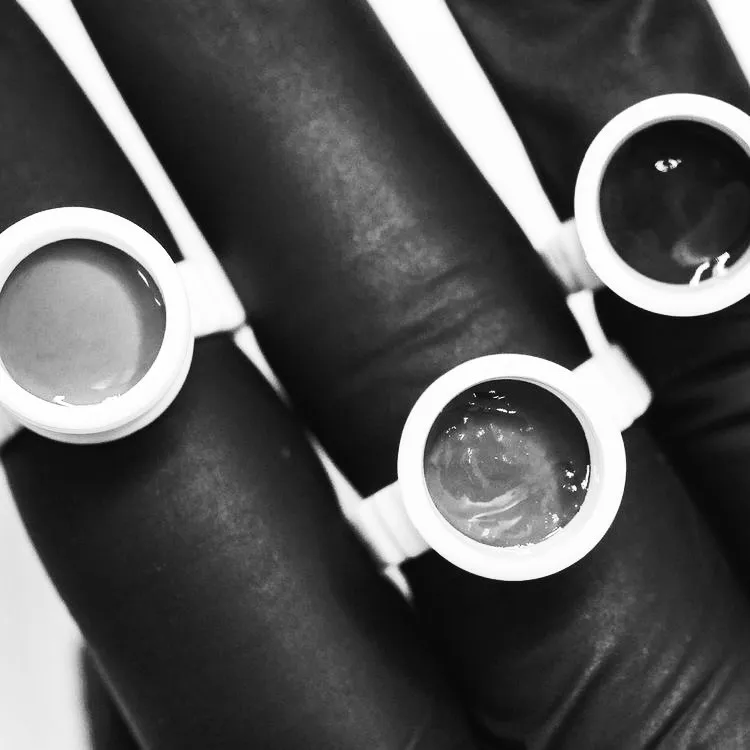
One of the most common questions I hear in my studio in Cascais, just outside Lisbon, is simple: “How long will this last?” The honest answer is not a single number. Two clients can walk out with brows that look identical on the day, and watch them age in completely different ways — one still soft and natural three years later, the other faint within a season.
The difference is rarely the artist's hand alone. It comes down to three things: the chemistry of the pigment, the behaviour of your skin, and one quiet number that almost nobody talks about — lightfastness.
“Permanent” is a misleading word
Let me start with something the industry rarely says out loud: permanent makeup is not truly permanent. Every pigment placed in skin will change. It will fade, soften, and slowly be processed by your body over the years.
So the real question was never “will it fade?” — it always does. The real question is how it fades. A great long-term result is one that fades predictably and evenly, staying believable as it lightens, rather than clinging on forever and drifting off-tone into grey, red or orange. (If you want the full story on why old brows shift colour, I wrote about it in Why eyebrow tattoos turn grey over time.)
This is the modern, high-end standard, and it completely reframes how a serious artist chooses a pigment.
The number that quietly decides everything: lightfastness
Every pigment used in permanent makeup has a lightfastness rating — a measure, on a scale from 1 to 8, of how well it resists breaking down under light and time. It is one of the most useful numbers in pigmentology, because it predicts roughly how long a pigment will stay readable in the skin and how gently it behaves there.
In plain terms, it sorts pigments into three broad groups:
- Low (around 3–5): photo-reactive pigments. They tend to be vivid and bright, but they break down relatively quickly — often within three to six months — and are more likely to provoke skin sensitivity.
- Medium (around 6–7): more stable. These typically hold for six to twelve months.
- High (8): photostable and the gentlest on skin. These are the pigments that can stay readable for one to two years or more before needing a refresh.
This single scale is the hidden reason one “brown” can be almost gone by your first touch-up while another, that looked the same in the bottle, is still there years later.
Why two identical brows fade at different speeds
Here is the part most people never hear: brown is not a pigment. It is a recipe — a blend of warm tones, a yellow, a red, sometimes a depth component, all balanced to read as a natural brown.
The catch is that the ingredients in that recipe do not fade at the same rate. When one component disappears faster than the others, the balance collapses and the colour shifts — which is exactly why faded brows can turn grey, red or sallow. So a pigment's lifespan depends on what it is built from:
- Mineral pigments (iron oxides) — the warm reds and yellows and the mineral blacks — sit at the very top of the scale. They are essentially insensitive to light and age slowly and predictably. They are the stable backbone of a natural brow.
- Modern stable organic pigments — certain advanced colour families — are impressively photostable too, bringing clean, refined colour without the old reputation for fading.
- Fugitive organic dyes — some older colour types — can sit very low on the scale. They are gorgeous and intense on day one, then drop away within months, often leaving the remaining colour unbalanced.
A brow built mostly on stable components ages slowly and evenly. A brow leaning on fugitive ones looks spectacular fresh, fades fast, and can heal into a problem. Knowing which is which — before a needle ever touches skin — is the core of pigmentology.
Carbon black: structure that lasts, with one caveat
Carbon black deserves its own mention, because it is misunderstood. It is extremely lightfast and gives hairstrokes their crisp, legible structure — which is why it is so useful in detailed, hair-by-hair work.
The caveat is balance. Because carbon is so stable, if the warm components around it fade faster, the carbon can begin to dominate and pull the brow cool, charcoal or grey over time. It is not a villain — it is a powerful tool that only works beautifully when it is properly balanced with stable warmth.
Your skin is the other half of the equation
Even a perfectly chosen, highly stable pigment will not last the same length of time on everyone — because your skin is half of the result.
- Oily skin tends to soften and diffuse pigment faster, and fine strokes blur sooner. (More on this in Best eyebrow tattoo for oily skin.)
- Sun exposure (UV) accelerates the breakdown of every pigment — Lisbon and Cascais sunshine is wonderful for life and hard on PMU. Daily SPF on healed brows genuinely extends their life.
- Metabolism, hormones and some medications can change how quickly your body clears pigment, which is why retention is sometimes less predictable.
- Mature and thin skin behaves differently again, and is a particular focus of mine — it usually rewards softer, lighter, well-balanced work over heavy saturation. (See Brows for mature skin.)
This is exactly why I never promise a fixed lifespan in months. I read your skin, your undertone and your history first — because they shape the answer as much as the pigment does.
What this actually means for your touch-ups
Once you understand lightfastness, touch-ups stop feeling like a flaw and start making sense. A well-planned brow is designed to fade gracefully and be refreshed — that is a feature, not a failure. A refresh lets me rebalance warmth before any colour shift becomes visible, top up density where life has softened it, and keep the shape current with your face.
The luxury standard in modern PMU is not “lasts the longest.” It is “stays believable the longest.” A pigment that holds on for a decade but drifts grey is a worse result than one that fades softly and evenly over a couple of years and is simply refreshed.
How I choose pigments at Browboutique
Pigment knowledge is what separates a great PMU artist from an average one. In my studio I work with two filters, always together: the chemistry of the pigment (how stable it is, how it will age, how it interacts with laser later) and the value and undertone that genuinely suit your skin — not just your hair colour.
In practice that means favouring photostable, well-balanced pigments for the bulk of the work; reserving vivid, short-lived pigments only for effects that are meant to be temporary; and, on fair, cool, sensitive or mature skin, choosing gentle, balanced formulas that will not surge warm or turn ashy as they age. Paired with my pixel-gradient Breath Brows™ method, the goal is always the same: a result that looks like hair, not tattoo, and that stays looking natural as it lives on your skin.
Conclusion
So — how long do permanent eyebrows last? Anywhere from a few months to a few years, and the spread is not random. It is decided by the lightfastness and balance of the pigment, the behaviour of your skin, your sun exposure and your own biology. The artists who understand this stop chasing colour and start designing how a brow will age.
That is the whole philosophy behind the work I do in Cascais, near Lisbon: not the longest-lasting brow, but the one that stays beautiful and believable for the longest time — and fades like skin, not like a tattoo.
Have questions about your brows, or how long yours might last on your skin? Book a consultation.
Related reading: Why eyebrow tattoos turn grey over time · Understanding pigments: organic vs inorganic and carbon black · Best eyebrow tattoo for oily skin · How long will enhanced brows last.
Have questions about your brows?
Book a Consultation