Signature Protocol · Hyperrealistic Nano Hairstrokes
Breath Brows™ | Hyperrealistic Nano Brows by Sabrina Zanin.
Breath Brows™ is Browboutique's signature protocol for hyperrealistic Nano Brows, also known as Machine Hairstrokes. Rather than following a fixed technique, every hairstroke is individually engineered through advanced pigmentology, personalised stroke architecture and pixel-gradient implantation, creating brows that heal with the softness, depth and irregularity of natural eyebrow hair.
Book your in-studio consultation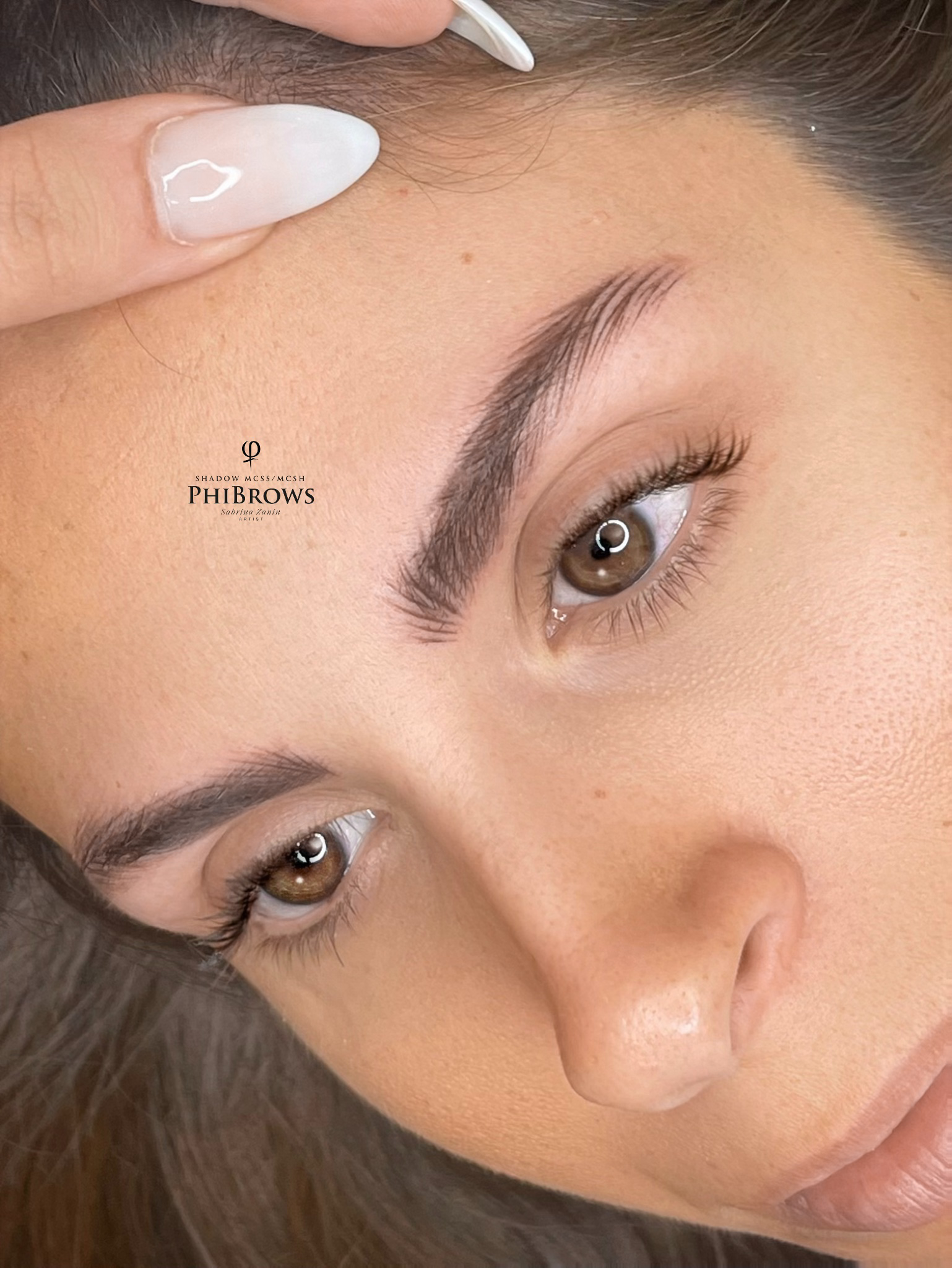
What is Breath Brows™?
Breath Brows™ is Browboutique's proprietary protocol for creating hyperrealistic Nano Brows, internationally known as Machine Hairstrokes. By combining advanced pigmentology, personalised stroke architecture and pixel-gradient implantation, the technique recreates the optical illusion of naturally growing eyebrow hair while respecting the biology of the skin.
Hyperrealistic
Designed to recreate the natural behaviour of eyebrow hair—not makeup, not decorative tattooing. Every hairstroke is individually planned to blend seamlessly with your existing brows.
Nano Brows (Machine Hairstrokes)
A bespoke machine-based hairstroke technique, customised through different needle configurations, taper lengths, pigment formulations and implantation methods to suit your unique skin and hair.
Soft Healed Result
Each hairstroke is designed to heal lighter, softer and more dimensional over time, creating brows that simply look like your own—only fuller, more balanced and beautifully refined.
Skin Respecting
Unlike traditional manual blade techniques, Breath Brows™ uses a digital machine to implant pigment through thousands of precise needle insertions, allowing exceptional depth control and a gentler healing process on most skin types.
What Makes Breath Brows™ Different
While Nano Brows, Machine Hairstrokes, Nano Hairstrokes and Digital Hairstrokes are commonly used to describe the same machine-based technique, Breath Brows™ is Browboutique's proprietary treatment protocol. Rather than following a standardised approach, it combines advanced pigmentology, personalised stroke architecture and pixel-gradient implantation to adapt every treatment to the individual client. The philosophy behind Breath Brows™ is simple: natural-looking brows are never created by one technique alone, but by hundreds of carefully balanced technical and artistic decisions working together.
No two treatments are ever identical.
Pigment selection is never based on colour alone. The formulation is chosen according to skin thickness, skin undertone, transparency and the expected long-term colour evolution after healing, allowing the brows to remain soft and natural over time.
Every Breath Brows™ treatment begins with observation rather than technique. Before the first hairstroke is created, every decision is guided by the client's facial anatomy, natural hair pattern, skin behaviour and long-term healing expectations.
The objective is not simply to implant pigment, but to recreate the visual behaviour of real eyebrow hair—soft where the hair begins, naturally textured through the body and seamlessly integrated with your existing brows.
This personalised approach is what makes Breath Brows™ unique.
Why every Breath Brows™ treatment is unique
Although Nano Brows and Machine Hairstrokes describe the same machine-based technique, no two Breath Brows™ treatments are ever performed in the same way.
Every eyebrow presents a different combination of skin thickness, elasticity, oil production, hair density, colour, growth pattern and facial anatomy. These variables determine how pigment behaves during implantation and how it will heal over the following weeks.
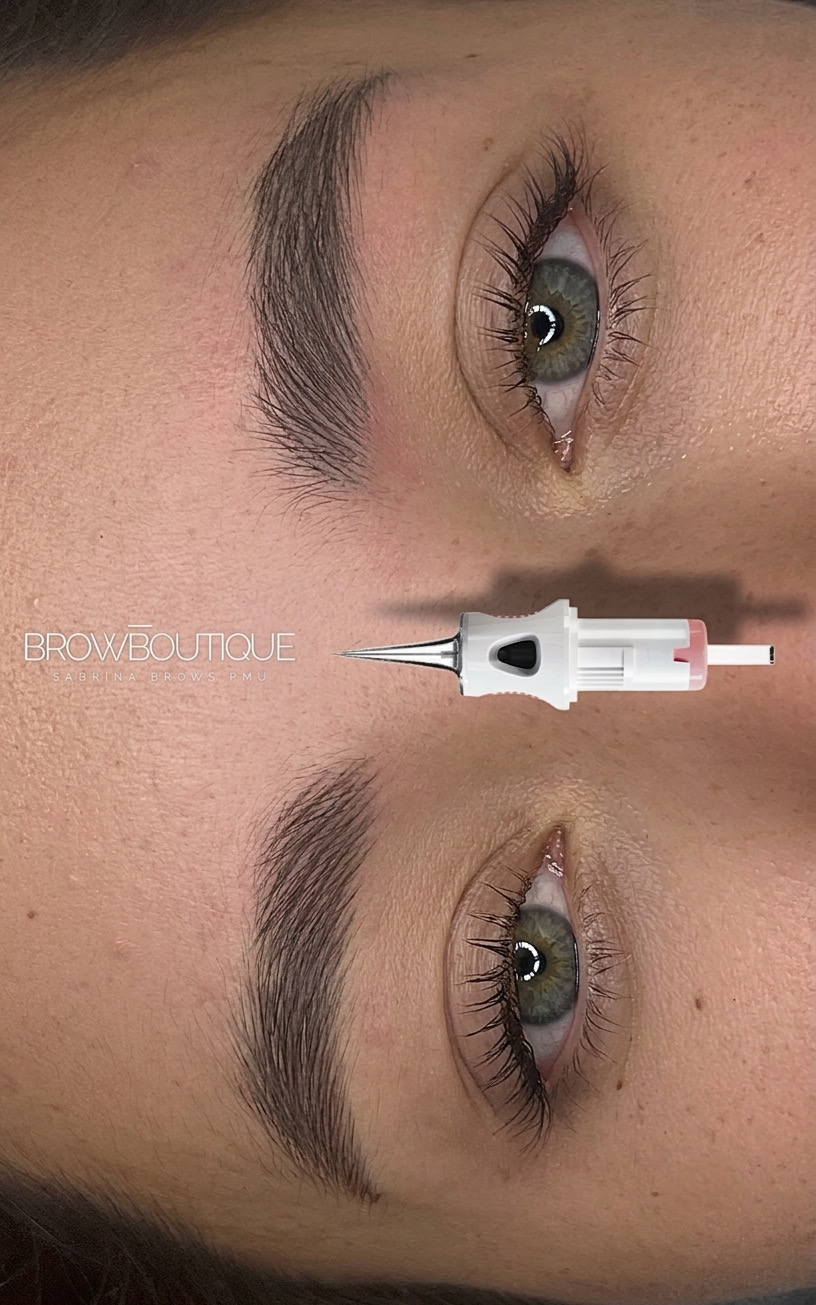
Rather than following a standard procedure, every treatment is individually engineered by selecting the most appropriate needle diameter, taper length, needle configuration, implantation rhythm, pressure, pigment composition and colour layering for each specific client.
The final result is influenced not only by needle configuration and pigment selection, but also by implantation rhythm, machine settings and stroke architecture, all individually adapted for each client.
Even different areas of the same eyebrow may require different technical approaches.
This level of personalisation is what allows Breath Brows™ to create brows that heal naturally, integrate seamlessly with existing hair and remain soft instead of looking repetitive or tattooed.
Why Machine Hairstrokes are gentler than Microblading
One of the greatest advantages of modern Machine Hairstrokes is the way pigment is implanted into the skin.
Traditional microblading creates each hairstroke by making a continuous micro-incision with a manual blade before depositing pigment inside that incision.
Machine Hairstrokes use a digital dermograph instead. Rather than creating one continuous cut, the machine implants pigment through thousands of extremely precise needle insertions, allowing the technician to control implantation depth, pressure and pigment distribution far more accurately.
Because the skin is not opened through a continuous blade incision, tissue trauma is generally lower, healing tends to be more predictable and pigment placement can be controlled with much greater precision.
For this reason, Machine Hairstrokes have become the preferred choice for many clients with mature skin, thinner skin, vascular skin or skin that has already undergone previous permanent makeup.
The technique allows exceptional realism while respecting the biology of the skin.
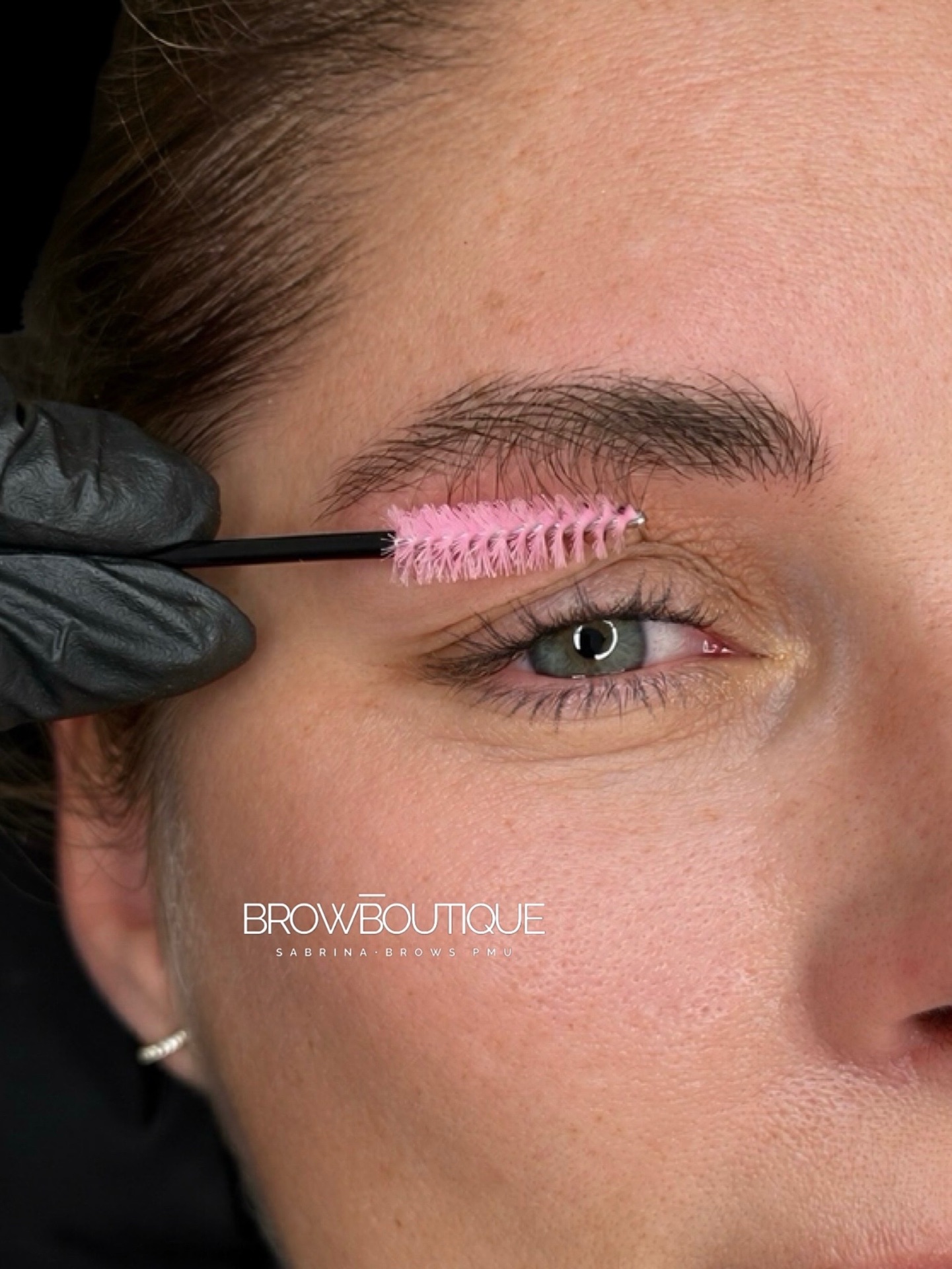
The 3D Pixel Gradient: how every hair is created
A Breath Brows™ hairstroke is never a simple tattoo line.
Instead, every individual hair is constructed from thousands of microscopic pigment pixels deposited by the dermograph.
Rather than implanting pigment uniformly from beginning to end, each hairstroke is carefully built by controlling the density, spacing and rhythm of these microscopic pixels.
The beginning of the hair contains fewer, lighter pixels, making it almost invisible where it appears to emerge from the skin.
As the hair develops, the pixels gradually become denser, creating natural strength through the body of the stroke before softly fading again towards the tip.
This gradual transition creates a true pixel gradient rather than a solid line.
The result is an optical illusion remarkably similar to natural eyebrow hair, where softness, depth and irregularity replace the flat appearance often associated with traditional tattooing.
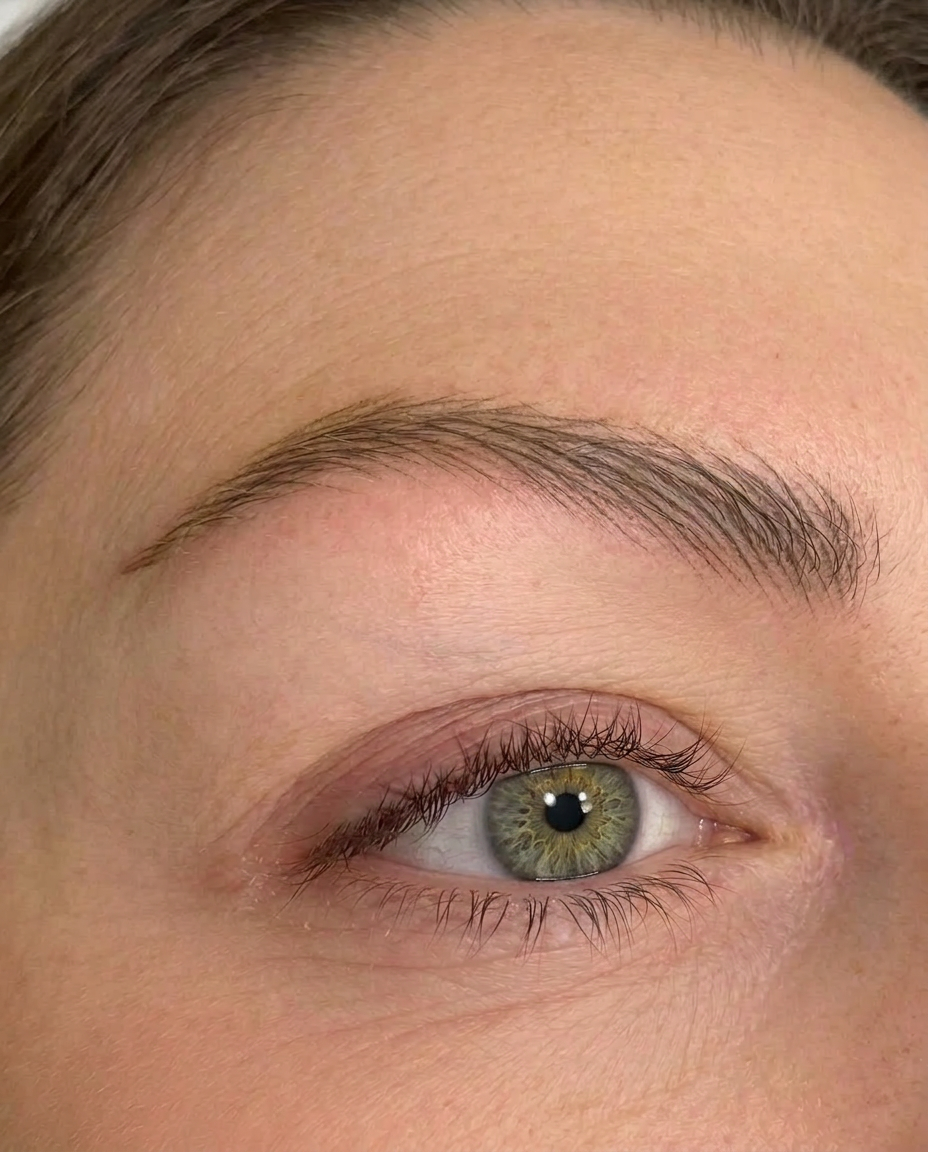
Why Breath Brows™ look three-dimensional
Natural eyebrow hairs are never perfectly flat or uniformly coloured.
Light interacts differently across every individual hair, creating tiny variations of brightness and shadow that our eyes instinctively recognise as natural.
Breath Brows™ reproduces this effect by combining pixel density, colour layering, implantation rhythm and carefully controlled stroke architecture.
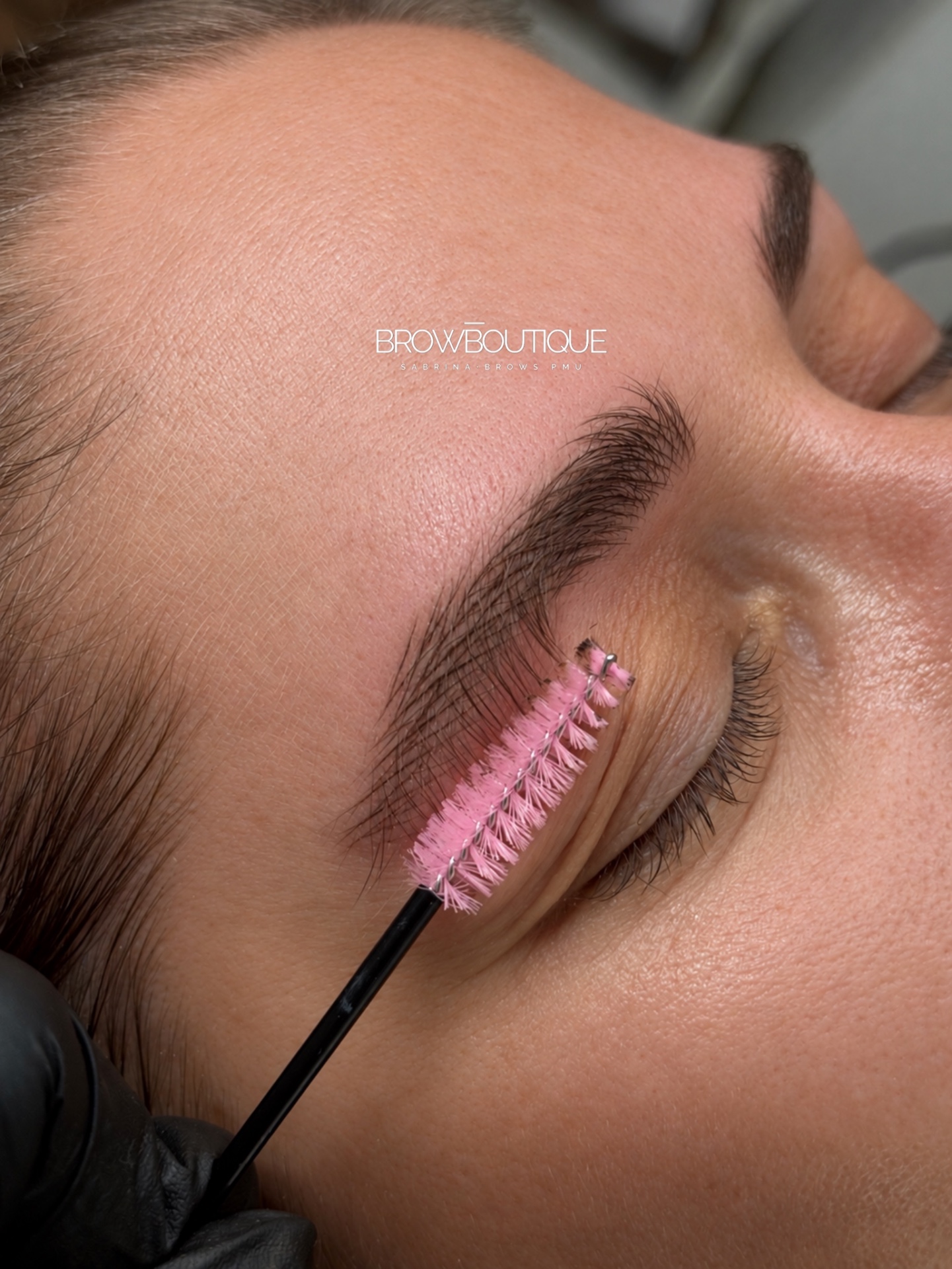
Instead of appearing as a flat tattoo sitting on the surface of the skin, every hairstroke develops subtle volume and depth, giving the entire eyebrow a remarkably lifelike appearance.
This three-dimensional effect is one of the defining characteristics of Breath Brows™ and one of the reasons the healed result remains soft, realistic and virtually indistinguishable from natural hair.
The objective is not simply to create visible hairstrokes. The objective is to recreate the optical illusion of naturally growing eyebrow hair, so convincingly that the permanent makeup disappears into the brow itself.
Understanding the science behind Breath Brows™ is one thing. Seeing how every individual hairstroke is planned and built is where the technique truly comes to life.
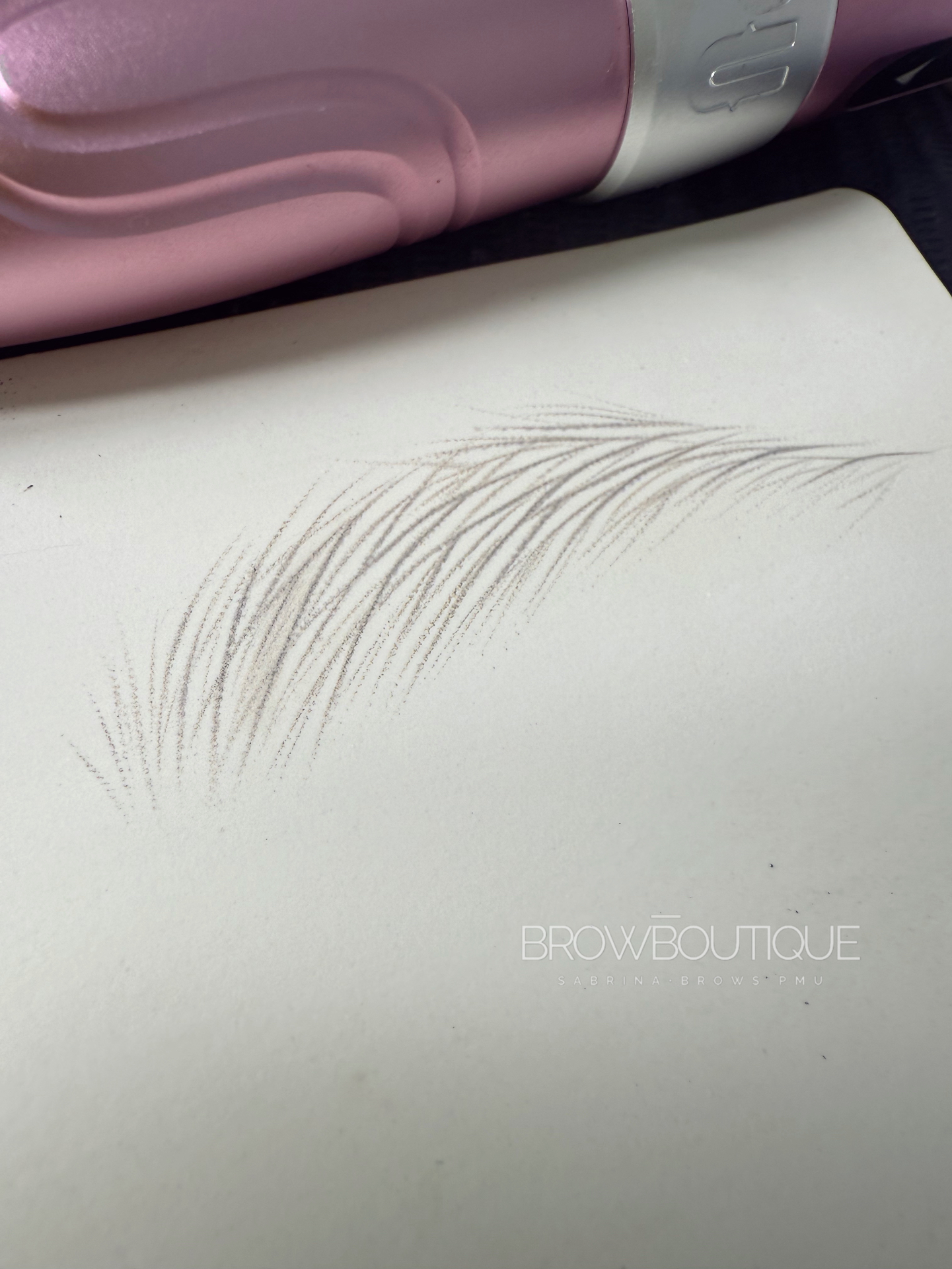
Stroke by stroke, by hand.
Behind the Technique
Every Breath Brows™ session begins with a hand-drawn pattern. Each hairstroke is mapped individually with the dermograph — direction, length, density and curvature calibrated to the client's natural growth. The same precision used in practice is what makes the healed result read as real hair.
From sparse brows to the illusion of natural hair.
Full Reconstruction Case
When little natural eyebrow hair remains, Breath Brows™ focuses on recreating the optical illusion of natural growth rather than simply adding pigment. The result is a soft, believable reconstruction designed to blend seamlessly with the client's features as it heals.
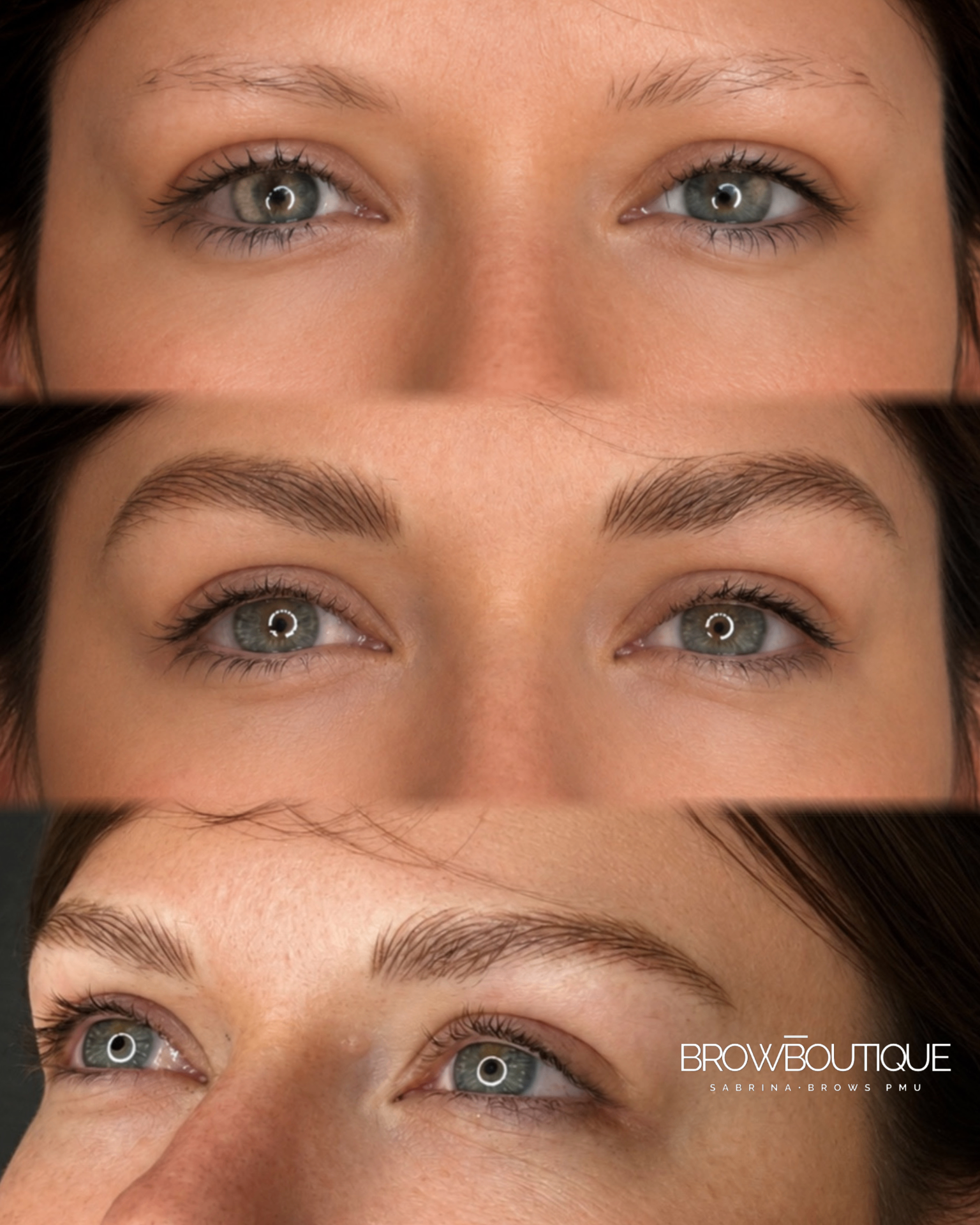
Realism is never created by one perfect hairstroke. It is created by hundreds of subtle decisions working together.
FAQ
Frequently Asked
Related reading
7 min
Men's eyebrows in 2026: why the pixel-gradient hairstroke beats microblading
The technical reason machine hairstrokes look more natural than microblading on men: each hair is built as a 3D gradient of pigment pixels, with shadow and depth, instead of a defined cut. The Breath Brows™ method explained — and why it is now the technique of choice for men, alopecia and reconstruction.
Read →6 min
What are hyperrealistic brows?
How modern machine-based hairstrokes differ from traditional microblading, and why the result looks like real hair growing from your skin.
Read →7 min
Why machine hairstrokes age better than microblading
After 12–24 months, machine hairstrokes and nano brows hold their shape far better than classic microblading on most skin types. Here is exactly why — and when each technique still makes sense.
Read →Ready to design your brows?
Begin with an in-studio consultation in Cascais. Only on a live skin assessment can Sabrina read your skin, draw the hair-by-hair simulation on your face and recommend the right technique for a result that lasts.
The in-studio consultation is the “see before commit” step: a separate paid service (30€, 45 min) and the only setting where a full hair-by-hair pencil simulation is drawn. It is never included in any treatment price. See full details.
Book in-studio consultation