
22 January 2025 · 7 min read
Understanding pigments in dermopigmentation: organic vs inorganic and the unique role of carbon black
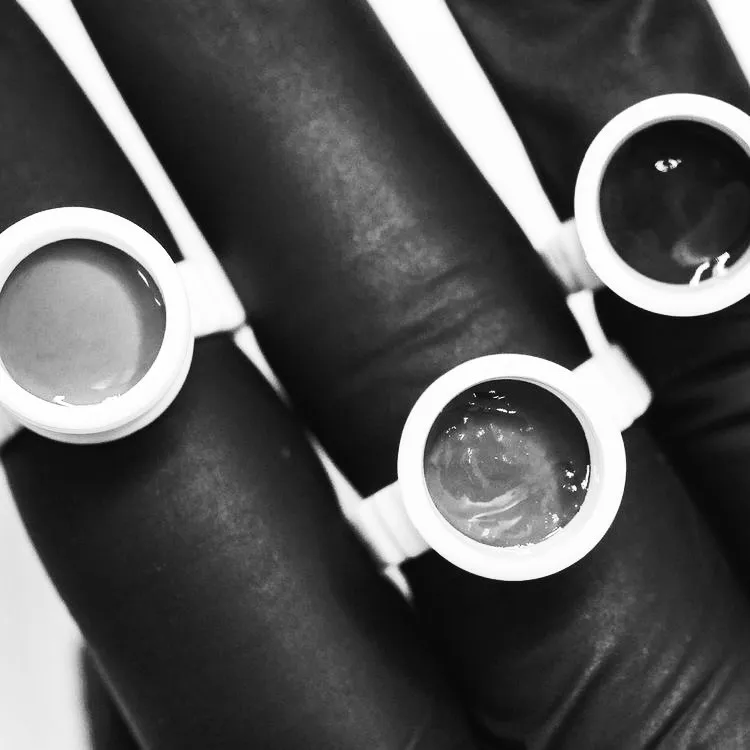
In the field of dermopigmentation — especially for eyebrow treatments like microblading — selecting the right pigment is crucial for achieving the desired aesthetic results. This article explores the differences between organic and inorganic pigments, with a special focus on carbon black, and the way each behaves over time.
Inorganic pigments: stability and fade resistance
Inorganic pigments are known for their excellent stability and resistance to fading. These pigments are derived from mineral compounds and are valued for their durability in many applications.
Fade resistance. Inorganic pigments generally have excellent resistance to fading when exposed to light, making them ideal for long-lasting applications.
Color stability. Recent advancements have improved the color stability of inorganic pigments, addressing earlier issues where they might have shifted to unwanted hues like red over time.
Despite their durability, inorganic pigments can sometimes fade more quickly within the skin compared to organic pigments, requiring more frequent touch-ups to maintain the desired look.
Organic pigments: vibrancy and color intensity
Organic pigments are derived from carbon-based molecules and are celebrated for their vibrant colors. They offer a wide range of hues and are often used when bright, vivid colors are desired.
Color intensity. Organic pigments tend to be more color-intense compared to inorganic ones, providing a broader spectrum of vibrant colors.
Fading. While they offer bright colors, organic pigments can be less stable over time, prone to fading and discoloration when exposed to environmental factors.
Carbon black: a unique case
Carbon black is an interesting case within dermopigmentation. Although it is classified as an inorganic pigment due to its elemental carbon composition, it exhibits certain characteristics similar to organic pigments:
Fine particle size. The fine particle size of carbon black allows it to disperse evenly, creating smooth and consistent color application.
Color intensity. Carbon black delivers a rich, deep black often sought after in dermopigmentation for its ability to create natural-looking yet bold results.
Durability. Despite being inorganic, carbon black maintains its color integrity over time without significant fading or color shifts.
Conclusion
Understanding the differences between organic and inorganic pigments is crucial for a dermopigmentation artist. Inorganic pigments offer excellent fade resistance and stability, while organic pigments provide vibrant colors with some trade-offs in durability. Carbon black stands out as a unique case due to its inorganic nature but organic-like behavior in certain applications. By leveraging these insights, professionals can make informed decisions about pigment selection to achieve optimal results.
Have questions about your brows?
Book a Consultation